DIY vs Professional Car AC Repair: A Guide
Some car AC tasks are perfectly fine to DIY, while others require professional tools and expertise. Learn exactly which repairs you can handle yourself and which to leave to the pros.
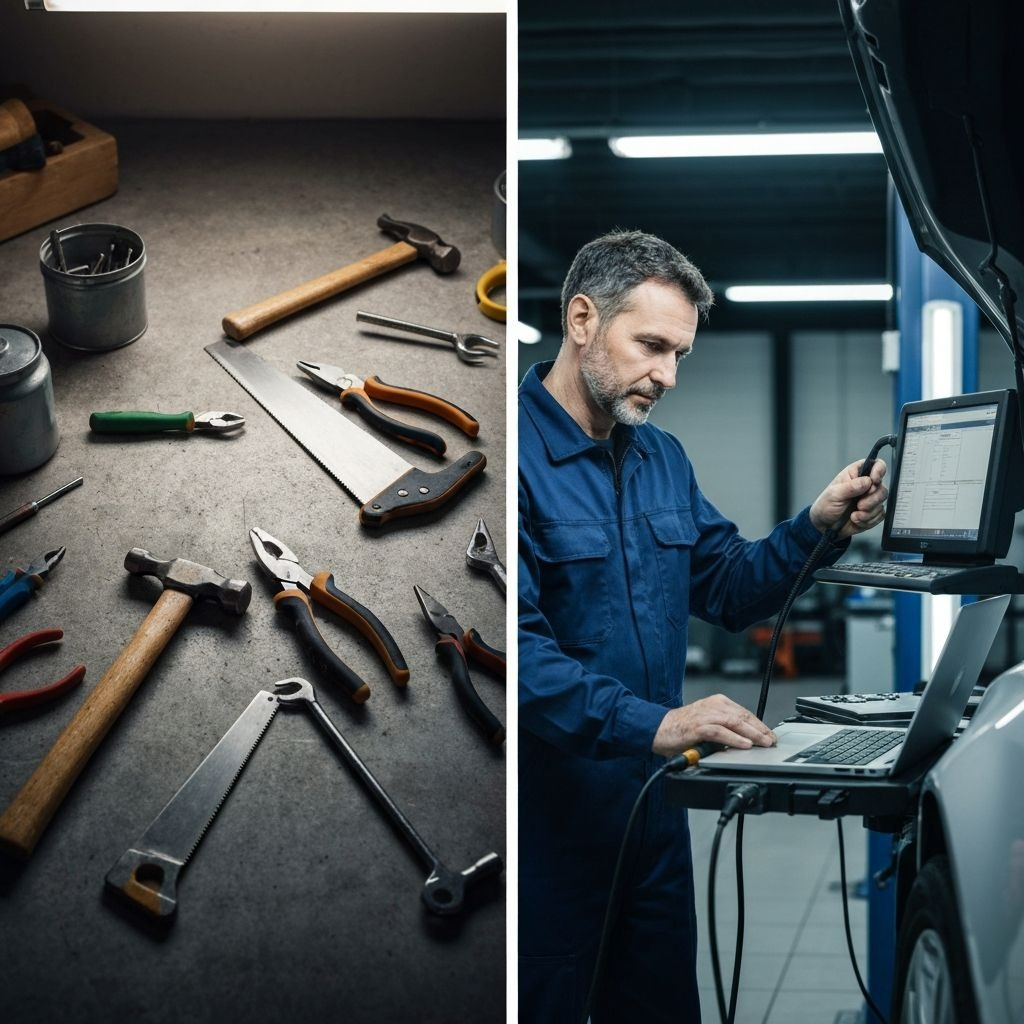
The DIY Question
With the cost of professional auto repair climbing every year, it's natural to wonder which car AC tasks you can safely tackle at home. The truth is nuanced — some maintenance tasks are perfectly suited for DIY, while certain repairs absolutely require professional equipment and expertise.
Making the wrong choice in either direction costs money: paying a shop for something simple wastes your money, while botching a complex repair at home can create damage far exceeding the original problem.
Safe DIY Tasks (No Special Tools Needed)
1. Cabin Air Filter Replacement
Difficulty: Easy
Time: 5-15 minutes
Cost savings: on request in labor
This is the number one DIY AC maintenance task. Most cabin filters are accessible through the glove box with no tools needed. Consult your owner's manual for the exact procedure for your vehicle.
2. Visual Inspection
Difficulty: Easy
Time: 10-20 minutes
You can visually check:
- Drive belt condition (cracks, glazing, fraying)
- Condenser for debris or visible damage
- AC hose connections for oil stains (indicating leaks)
- Cooling fan operation (watch them run with AC on)
- Fuses in the fuse box related to AC components
3. Condenser Exterior Cleaning
Difficulty: Easy
Time: 15-30 minutes
Carefully spray the condenser with a garden hose to remove bugs, dirt, and debris. Use gentle water pressure — never a pressure washer, which can bend the delicate aluminum fins.
4. AC Antibacterial Treatment
Difficulty: Easy
Time: 10-15 minutes
Cost: on request
Spray-can AC antibacterial treatments can be applied through the cabin filter housing or the condensate drain to kill mold and bacteria on the evaporator. This addresses musty AC smells.
5. Checking AC Performance
Difficulty: Easy
Time: 5 minutes
Using a simple thermometer in the center vent, you can measure the output temperature. On a moderately warm day, the vent temperature should be at least 10-15°C below the ambient temperature. This helps you know when it's time to seek professional service.
Borderline Tasks (Proceed with Caution)
6. DIY Refrigerant Recharge Kits
Difficulty: Moderate
Risk: Moderate to High
This is where opinions divide sharply. DIY recharge cans (R-134a) are widely available and seem simple to use. However:
Risks include:
- Overcharging the system (can destroy the compressor)
- No way to properly measure existing charge
- Doesn't address the underlying leak
- Can introduce moisture and contaminants
- Wrong refrigerant type risk (R-134a vs R-1234yf)
- Not removing old/contaminated refrigerant first
Our recommendation: If you understand the risks and your system uses R-134a, a DIY top-off can be a temporary solution. But plan to get professional service for a proper diagnosis and repair.
7. Fuse and Relay Replacement
Difficulty: Easy to Moderate
Risk: Low
Replacing a blown AC fuse or relay is straightforward if you can locate them. The risk is that a blown fuse is often a symptom, not the root cause. If the new fuse blows again, there's an underlying electrical issue that needs professional diagnosis.
Professional-Only Tasks (Don't Attempt at Home)
8. Compressor Replacement
Why professional: Requires refrigerant recovery equipment, proper torque specifications, correct oil amounts, system evacuation, and precise recharging. Improper installation contaminates the entire system.
9. Leak Repair
Why professional: Requires professional detection equipment (electronic sniffers, UV dye systems) and specialized tools for accessing leak points. Many leaks are in locations that require significant vehicle disassembly.
10. System Evacuation and Recharge
Why professional: Requires certified AC machine that can recover refrigerant (venting is illegal), pull a proper vacuum, and charge the exact manufacturer-specified amount. Overcharging or undercharging both cause problems.
11. Evaporator Replacement
Why professional: The evaporator is buried deep inside the dashboard. Replacement typically requires removing the entire dashboard — a 6-10 hour job with hundreds of connectors and fasteners.
12. Expansion Valve Replacement
Why professional: Requires refrigerant recovery, component access that varies by vehicle, and proper system recharging afterward.
13. Electrical Diagnosis
Why professional: Modern AC systems use multiple sensors, actuators, and a control module. Proper diagnosis requires automotive scan tools that can read AC-specific diagnostic codes and live data.
Cost Comparison: DIY vs Professional
| Task | DIY Cost | Professional Cost | Savings |
|---|
|------|----------|-------------------|---------|
| Cabin filter | on request | on request | on request |
|---|---|---|---|
| Condenser cleaning | on request | on request | on request |
| AC antibacterial | on request | on request | on request |
| Refrigerant top-off | on request | on request | on request |
| Compressor replacement | DON'T | on request | N/A |
| System recharge | DON'T | on request | N/A |
The Bottom Line
The best approach combines DIY maintenance with professional service:
- Do yourself: — Cabin filter replacement, visual inspections, condenser cleaning, and antibacterial treatments
- Leave to professionals: — Anything involving refrigerant handling, component replacement, or electrical diagnosis
This hybrid approach keeps your costs down while ensuring critical repairs are done correctly. Regular DIY maintenance also helps you catch developing problems early, before they become expensive professional repairs.
Safety First
Remember these absolute rules:
- Never open a pressurized AC system without proper recovery equipment
- Never mix refrigerant types
- Refrigerant can cause severe frostbite on contact with skin
- R-1234yf is mildly flammable — extra caution required
- EV AC systems operate at lethal voltages — never attempt DIY repair